
Overview
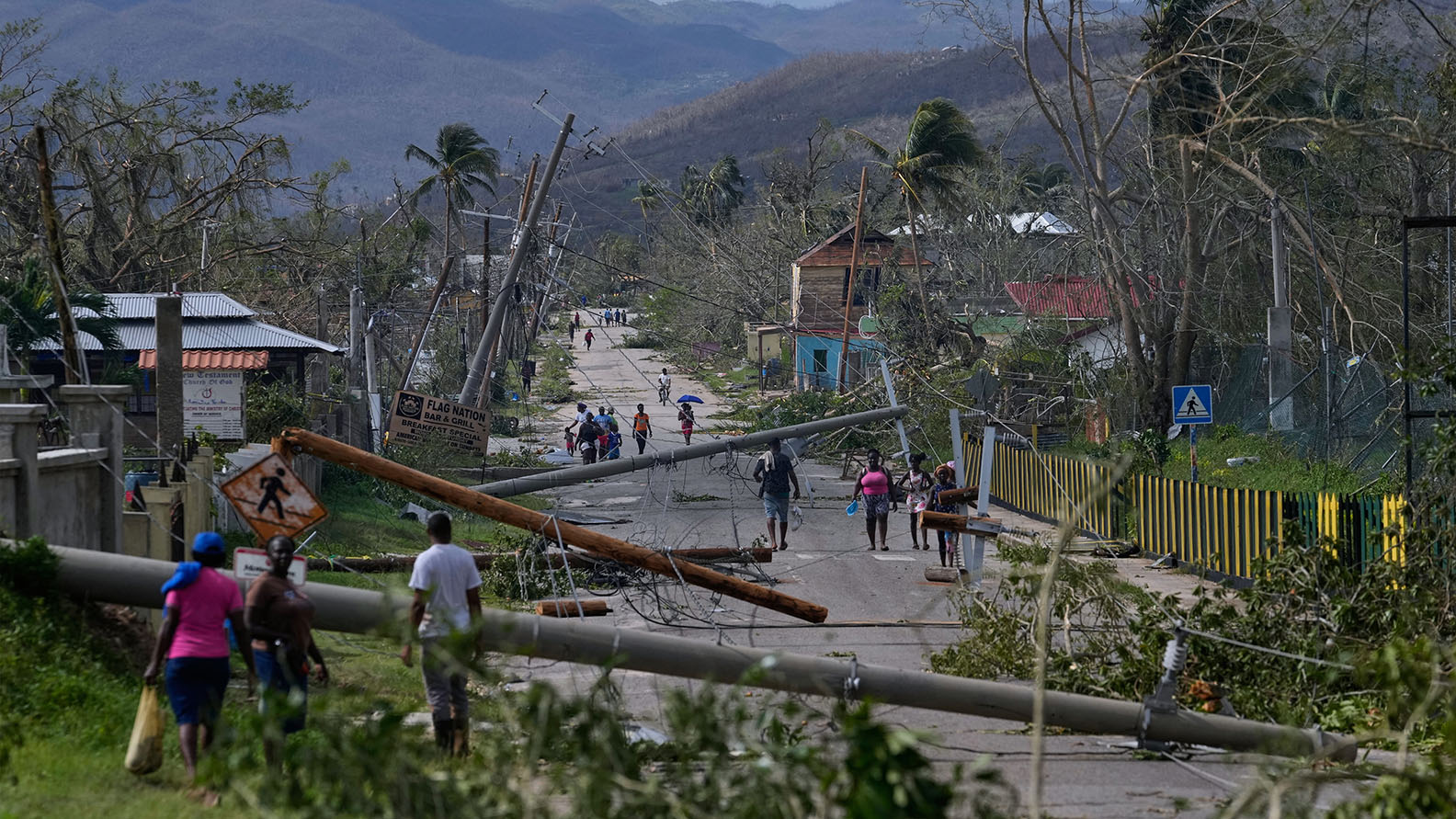
Hurricane Melissa made landfall in Jamaica on October 28, 2025, triggering severe flooding, landslides, and widespread infrastructure damage. Yet even in the immediate aftermath, Jamaica’s recovery narrative has been defined by two parallel realities: meaningful disruption in the short term, and a coordinated, well-capitalised rebuild that is already restoring mobility, utilities, commerce, and tourism—conditions that ultimately underpin out-of-home (OOH) and digital out-of-home (DOOH) advertising performance.
For advertisers, the post-Melissa period is shaping up as a high-visibility moment: audiences are more locally attentive, public messaging is more valued, and brands that show up consistently (and appropriately) tend to earn disproportionate recall. With reconstruction funding and renewed emphasis on resilient infrastructure, Jamaica’s digital billboard landscape is positioned not merely to recover—but to modernise.
What “post-Melissa” means for billboards in practical terms
1) Rapid national recovery supports a return of traffic and economic activity
The Jamaican government has publicly described “strong recovery momentum” within weeks of landfall, acknowledging ongoing challenges while emphasising disciplined progress. At the operational level, the restoration of road access is critical to OOH value: official updates show road-clearing and reopening work progressing as water levels recede and blocked routes are addressed.
Why this matters for advertisers: OOH works when people move—commuting, shopping, traveling. As routes reopen and normal activity resumes, impressions rebound quickly, and digital inventory becomes especially valuable because it can be updated instantly to match reopening phases, supply availability, and location-by-location demand.
2) Major reconstruction financing de-risks the medium
A key indicator of resilience is not just intent to rebuild, but the ability to finance it. Reuters reported that Jamaica secured up to $6.7 billion in financial assistance from international agencies for recovery and reconstruction over the next three years. This scale of funding typically drives activity in construction, retail replenishment, telecoms, utilities, and public communications—sectors that are heavy users of OOH.
Why this matters for advertisers: Rebuild cycles produce sustained marketing demand (hiring, announcements, retail restocking, service restoration, new openings). Digital billboards become a practical channel for “always-on” updates without reprinting costs.
The resilience case: why digital billboards are likely to strengthen, not shrink
1) The industry is already shifting toward better monitoring and durability
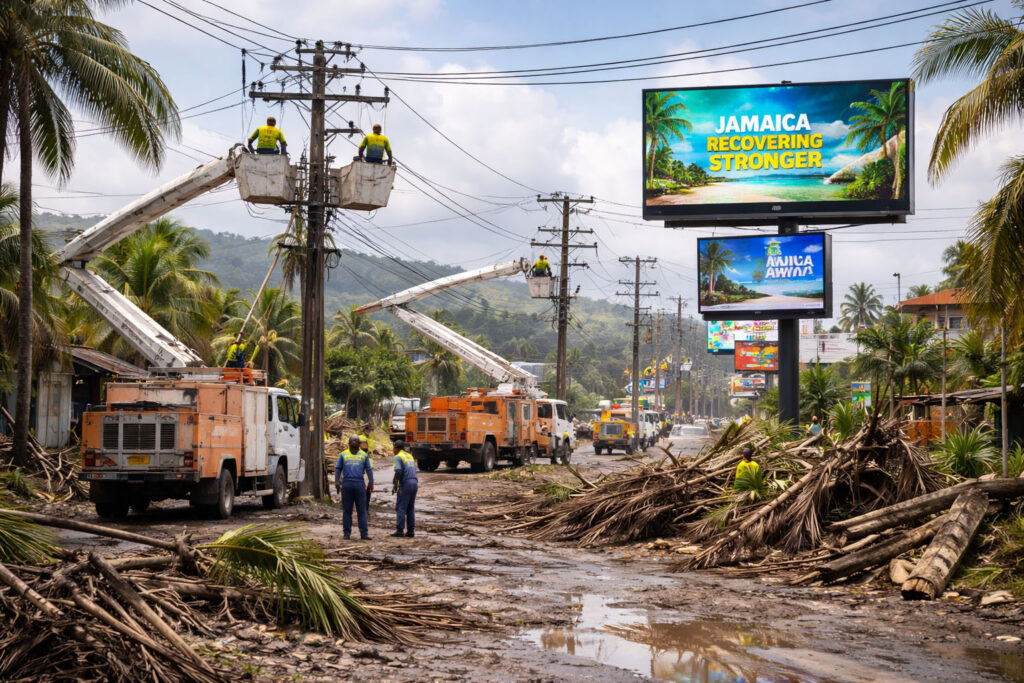
Jamaica’s outdoor advertising industry has explicitly pointed to the integration of technologies to better monitor and maintain billboard assets following recent hurricane lessons. This direction aligns with a broader global DOOH trend: operators increasingly adopt remote monitoring, preventative maintenance, and faster response workflows, improving uptime and reducing storm-related downtime.
Implication: Post-Melissa capex is more likely to flow into more resilient structures, smarter maintenance regimes, and improved operational discipline—raising reliability for advertisers.
2) Utilities and communications continuity are a strategic priority
The post-storm environment has sharpened focus on grid resilience and restoration performance—issues actively monitored by regulators and covered heavily following prior hurricane impacts. For DOOH, power and connectivity are foundational. The policy and operational emphasis on restoration and system hardening supports higher continuity for digital screens over time.
Implication: As Jamaica “builds forward,” digital infrastructure becomes a central part of public-facing normalcy—and screens benefit from the same push for reliability.
Why DOOH is a strong choice for advertisers right now
- Flexibility and speed - Digital billboards allow rapid creative changes without production delays—particularly valuable during phased reopening and changing inventory conditions. This is one reason DOOH continues to grow globally as brands prioritize adaptability and real-time messaging.
- Share-of-voice opportunities - Post-disruption periods often reset competitive dynamics. Some brands pause; others stay visible. When fewer advertisers are active, the brands that remain can achieve higher share-of-voice and recall—especially on premium, high-traffic routes.
- Brand trust and community alignment - The most effective post-storm advertising is not “hard sell.” It is supportive, relevant, and action-oriented: reassurance, helpful updates, community support, and solutions. Done well, this builds trust while still driving measurable outcomes.
Outlook: the next 6–18 months for Jamaican digital billboards
The most evidence-based outlook is cautiously optimistic: Jamaica is attracting significant reconstruction financing, publishing government recovery updates, and showing travel-sector resilience—all of which support traffic recovery and commercial activity. Meanwhile, the outdoor advertising sector is actively discussing improved technology and maintenance practices in response to hurricane learnings—pointing toward stronger, more reliable media assets.
Bottom line: Post-Melissa, digital billboards in Jamaica are not simply “back.” They are likely to become more strategic—more resilient in engineering and operations, more valuable for rapid messaging, and more central to how brands communicate in high-traffic public spaces during the rebuild.